We build the cities of the future today
The Information Resource Center of the Samarkand State University of Architecture and Construction was established by the Resolution of the President of the Republic of Uzbekistan No. PQ-381 dated June 20, 2006.
The total fund of the ARU is 400,100, of which 97,401 are textbooks, 7,200 are foreign literature, 128,248 are study guides, 57,145 are fiction, 103,498 are scientific literature and 37,204 are other literature.
There are 4 study halls with 56 seats for students. In addition, there is 1 study hall with 14 seats in dormitory No. 1, a study room with 12 seats in dormitory No. 2, and a study room with 12 seats in dormitory No. 4.
The Information Resource Center (Library) of the Samarkand State University of Architecture and Construction is a building of cultural significance. This center is open not only to university students and academic staff but also to employees and students of other higher education institutions, as well as the general public.
Access to the library’s collection is completely free of charge, providing all users with the opportunity to expand their knowledge in the fields of education, science, and culture. Through its activities, the Information Resource Center plays an important role in strengthening the intellectual and cultural environment, enhancing scientific potential, and supporting a sustainable education system.
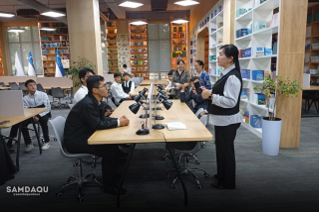
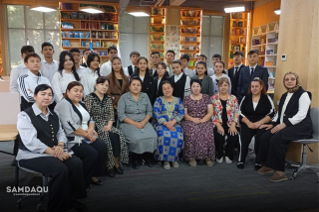
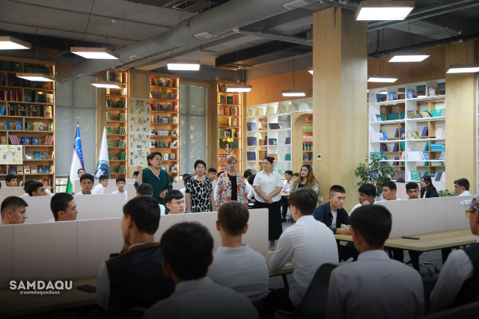
To provide better opportunities for research and academic work for the faculty and students of Samarkand State University of Architecture and Construction, our university has signed an agreement with Elsevier, granting several years of free access to the Scopus database.
Now, all faculty members and students of the university can widely use scientific articles, journals, and other publications, which will contribute to further enhancing their research potential. We encourage everyone to take full advantage of this opportunity for the advancement of science and education.
Students and employees of Samarkand State Architecture and Construction University have the opportunity to use the Samarkand Regional Information and Library Center named after A.S. Pushkin free of charge. Visits for students are organized throughout the year.
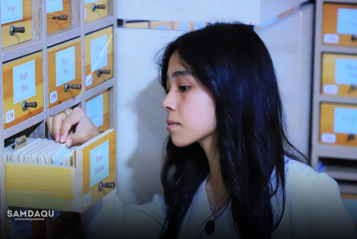
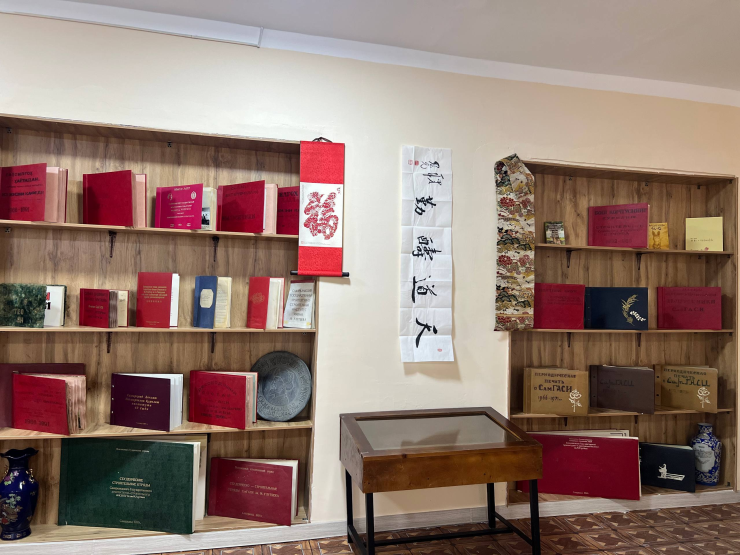
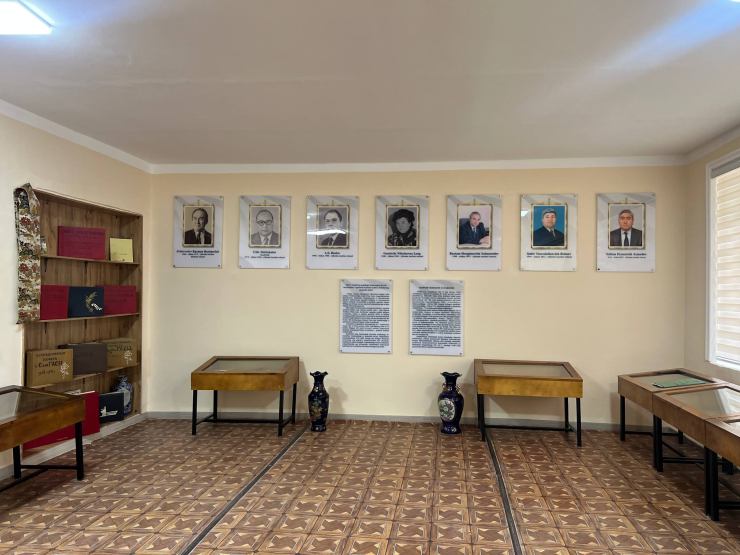
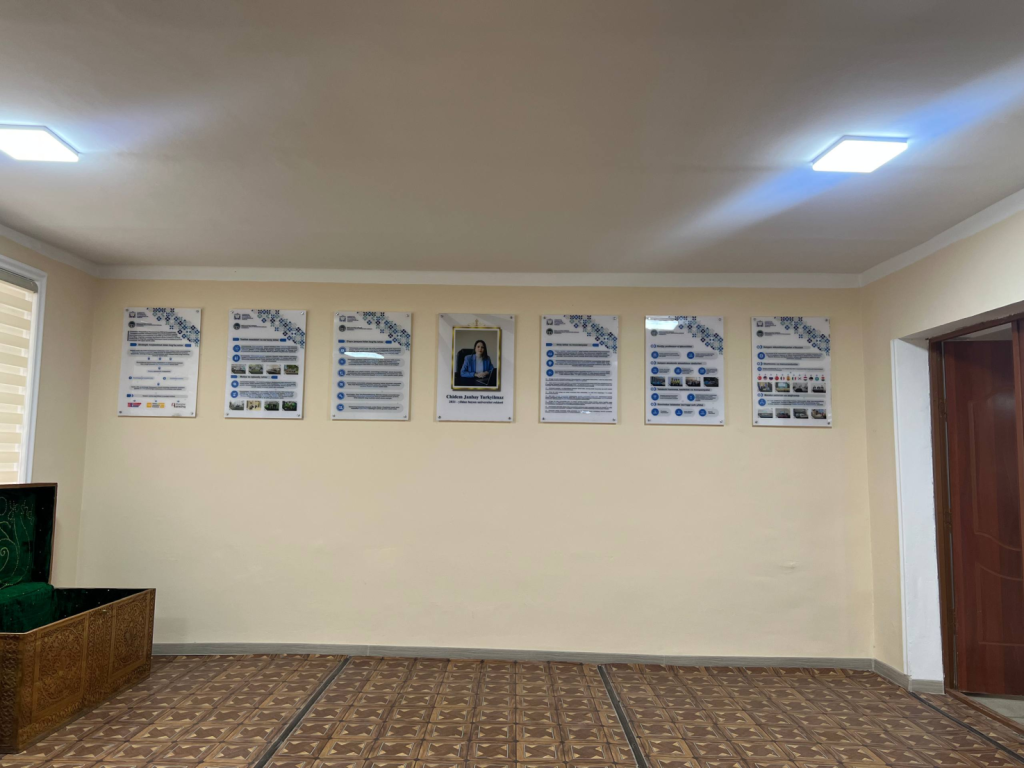
The Museum of Samarkand State Architecture and Construction University is dedicated to the history of the university, its stages of development, and its achievements in the field of architectural education. The museum reflects the most significant milestones in the university’s evolution and academic journey.It showcases valuable exhibits highlighting the contributions of leading professors, distinguished alumni, scientific innovations, architectural projects, and international cooperation programs of the university. Among the exhibits are rare photographs, architectural drawings, models, and historical documents from the early years of the institution.The museum is permanently open to university staff, students, and visitors, serving not only as a source of historical knowledge but also as a cultural and educational space that inspires young generations and enriches their understanding of national heritage and architectural progress.
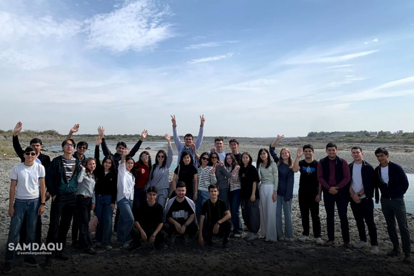
The tutors of the Student Affairs Department of the Mirzo Ulugbek Samarkand State University of Architecture and Construction Makhliyo Akhmedova, Asliddin Nabiyev, Akbar Tursunov, and Ikrom Pirmatov Morganized a trip to Shahrisabz, Kashkadarya region, for the students of the Faculty of Construction in honor of December 3 – International Day of Persons with Disabilities.
The tutor of the Student Affairs Department of the Mirzo Ulugbek Samarkand State University of Architecture and Construction, Navruza Suyarqulova, together with students of the Mechanical Engineering program, visited the “Art Station” Residence Art Gallery under the Silk Road International University of Tourism and Cultural Heritage.
In order to make the leisure time of the students of the Faculty of Architecture at the Mirzo Ulugbek Samarkand State University of Architecture and Construction more meaningful, a trip to the Zarafshan Nature Reserve was organized by Bashorat Turdiyeva, tutor of the Student Affairs Department, and Lolita Zalotdinova, lecturer at the Department of Architecture.
The trip was organized for first- and second-year students majoring in Architecture (by specializations) with the aim of effectively utilizing their free time, as well as promoting environmental protection and the preservation of nature.
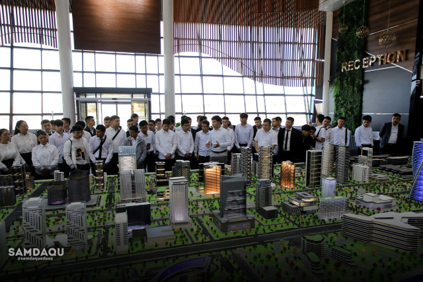
As part of the “Orientation Week” program at the Mirzo Ulugbek Samarkand State University of Architecture and Construction, students of the Architecture and Construction Faculties visited the “Shirin” residential complex design directorate.
The visit, organized with the participation of Dean Sherzod Bozorov and representatives of the “Shirin” directorate, aimed to familiarize students with real construction projects, develop professional awareness, and make their leisure time meaningful. The ongoing construction processes of the complex left a strong impression on the students.
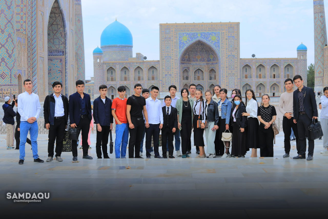
In order to make the leisure time of the students of the Faculty of Construction at the Mirzo Ulugbek Samarkand State University of Architecture and Construction more meaningful, Navruza Suyarqulova, tutor of the Student Affairs Department, organized an educational trip for the students to the cultural landmarks of our country.
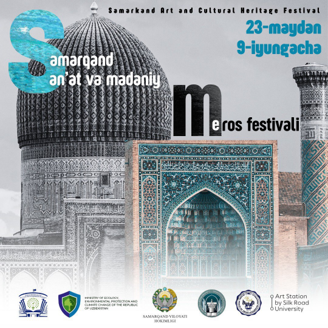
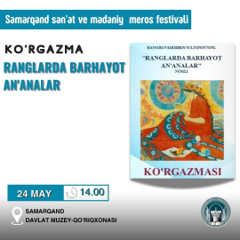

From May 23 to June 9, the “Samarkand Art and Cultural Heritage Festival” was held in Samarkand city.
The festival served as a vibrant platform to promote national art, cultural traditions, and creative exchange, bringing together artists, architects, designers, and cultural enthusiasts from across the country and abroad. During the festival, various art exhibitions, cultural performances, workshops, and heritage preservation discussions were organized, showcasing Samarkand’s unique role as a center of creativity and intercultural dialogue
Within the framework of the Samarkand Art and Cultural Heritage Festival, an exhibition titled “Living Traditions in Colors” by the artist Namozboy Sultonov was organized in collaboration with the Cultural Heritage Agency of the Republic of Uzbekistan, the Samarkand State Museum-Reserve, the Artists’ Union under the Academy of Arts of the Republic of Uzbekistan, and the Mirzo Ulugbek Samarkand State University of Architecture and Construction.
As part of the Samarkand Festival of Arts and Cultural Heritage, a screening of historical films was held at the Silk Road Art Residency (Art Station) at the Silk Road International University of Tourism and Cultural Heritage.
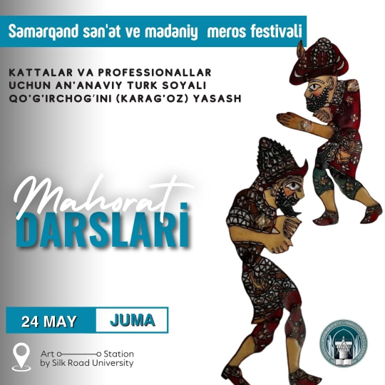
As part of the Samarkand Festival of Arts and Cultural Heritage, master classes were organized at the Silk Road (Art Station) art residency at the Silk Road International University of Tourism and Cultural Heritage.
In these master classes, participants learned the secrets of reviving a Shadow Puppet based on traditional features in a workshop using the classical methods of Karaguz art, which is included in the UNESCO Intangible Cultural Heritage List.
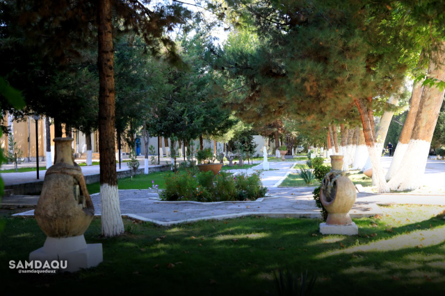
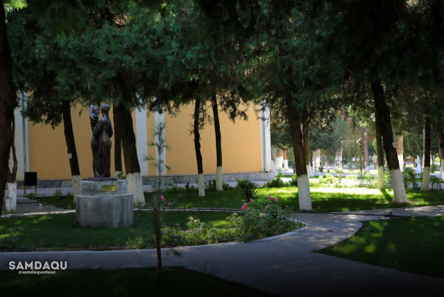
The Samarkand State University of Architecture and Construction owns a recreation area located outside the city in the Mirankul region, covering more than 11 hectares. The site features a natural landscape, a fruit orchard, and various mountain-field medicinal plants cultivated in the area, serving as a recreational and eco-educational zone for the university.University staff and students frequently visit this natural landscape, and access to the area is completely free of charge for all members of the university community.
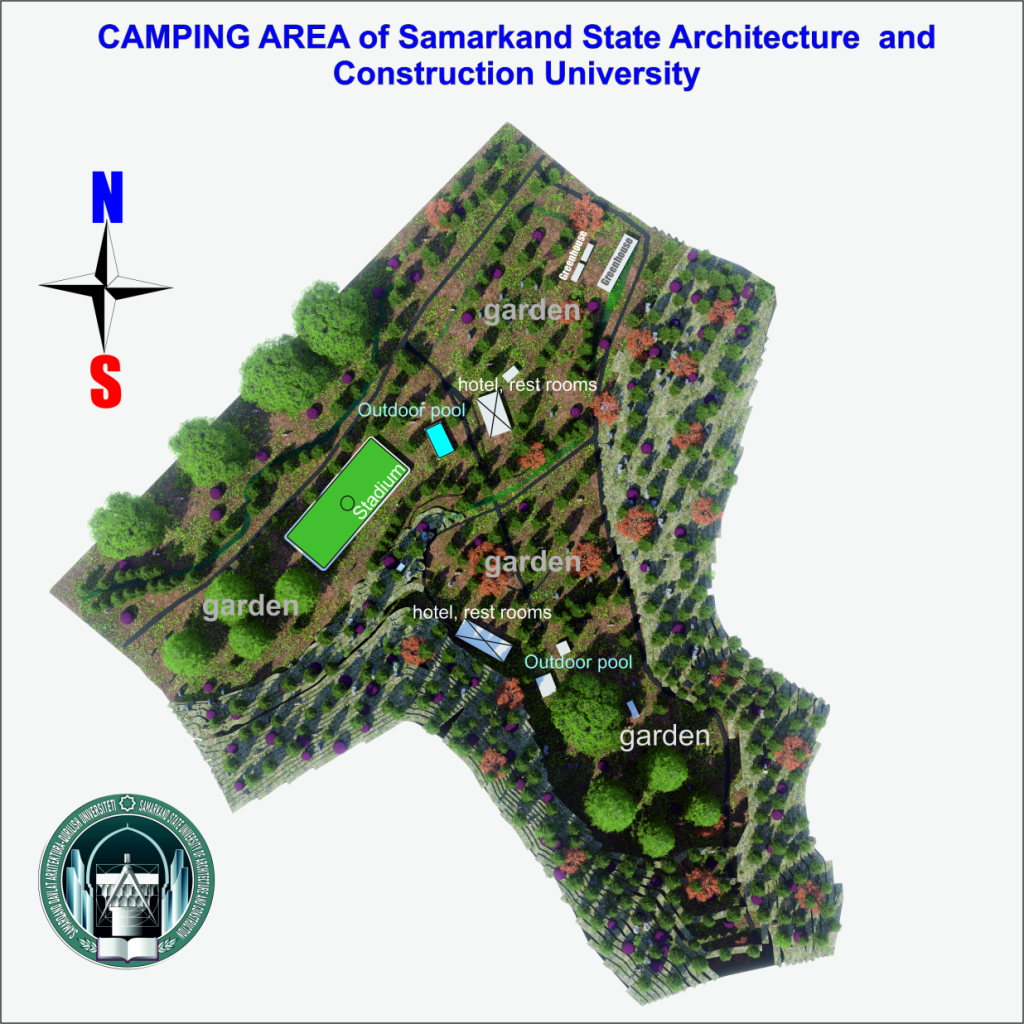
The Samarkand State University of Architecture and Construction owns a recreation area located outside the city in the Mirankul region, covering more than 11 hectares. The site features a natural landscape, a fruit orchard, and various mountain-field medicinal plants cultivated in the area, serving as a recreational and eco-educational zone for the university.University staff and students frequently visit this natural landscape, and access to the area is completely free of charge for all members of the university community.
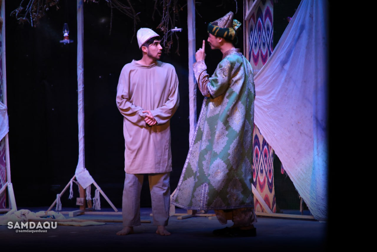
The theater team “Ulugbek’s successors” of the Samarkand State University of Architecture and Civil Engineering named after Mirzo Ulugbek took part in the regional (second) stage of the republican competition of theater studios of higher educational institutions and won 1st place.
The theater team “Ulugbek’s successors” skillfully performed Carlo Gozzi’s “Happy Beggars”.
Samarkand State University of Architecture and Construction
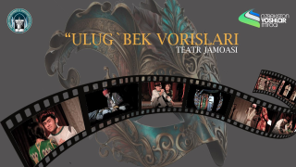
Ulug‘bek Vorisari Theatre Studio Activity Report
1. General Information
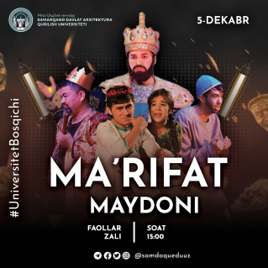
At Samarkand State University of Architecture and Construction (SamSACU), the Ulug‘bek Vorisari Theatre Studio has been established to enhance students’ cultural and creative activities. The main objective of the studio is to introduce students to the art of theatre, develop their creative abilities, and improve their stage performance skills.
2. Annual Activities
Throughout the year, the studio stages a series of performances, presenting them to university students and the wider community. The performances cover various genres and themes, including both contemporary and classical works. Through these activities, students not only learn about theatre art but also develop creative thinking, stage etiquette, and teamwork skills.

3. Participation in Competitions
The Ulug‘bek Vorisari Theatre Studio actively participates in national theatre and cultural competitions. Over the past years, the studio team has won several awards, gaining recognition both within the university and at the national level. These achievements clearly demonstrate the high level of creative activity and talent among the students.
4. Future Plans
The studio’s future plans include further development of theatrical activities, preparation of new performances, and participation in national and international competitions. Additionally, special training sessions and masterclasses for students are planned to further enhance their creative potential.

Conclusion
The Ulug‘bek Vorisari Theatre Studio plays a significant role in the cultural and creative development of SamSACU students. Its activities enrich the university’s cultural life and provide students with opportunities to showcase their talents and gain professional theatre experience.
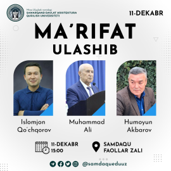
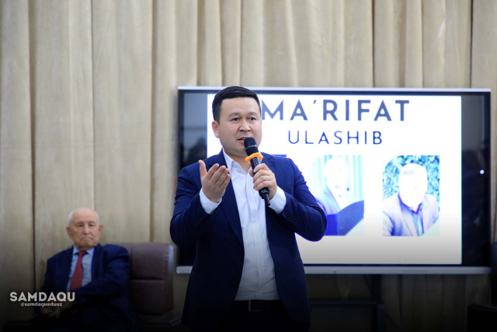
“Ma’rifat Ulashib” Project at Samarkand State University of Architecture and Construction
1. General Objective
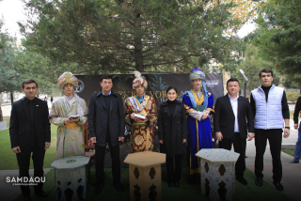
The “Ma’rifat Ulashib” project, organized by the Student Dean’s Office of Samarkand State University of Architecture and Construction (SamSACU), aims to engage students and the younger generation in cultural heritage, promoting national values, traditions, and folklore. The main goal of the project is to preserve, promote, and raise awareness of intangible cultural heritage among students.
2. Annual Activities and Events
Throughout the year, the project organizes various events and meetings, including:
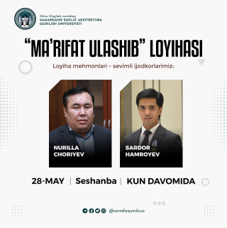
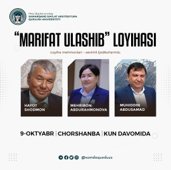
•Meetings with writers and cultural figures: Students meet with renowned authors, poets, folklore experts, and scholars to learn from their work, experience, and academic insights.
•Study of local folklore and traditions: Students collect information about local folklore, customs, traditional celebrations, and rituals.
•Language and literature initiatives: The project promotes the Uzbek language and literature, fostering reading culture and literary appreciation among young people.
•Preservation of intangible cultural heritage: Students collaborate with museums, libraries, and local cultural centers to document and safeguard various elements of intangible cultural heritage.
3. Significance of the Project
•Educates students in the spirit of respect for national values and cultural heritage.
•Promotes local folklore, traditions, and language among the younger generation.
•Enhances students’ academic, creative, and cultural engagement.
•Increases public awareness and interest in the preservation of cultural values.
4. Future Plans
The “Ma’rifat Ulashib” project is planned to continue developing, with future objectives including:
•Organizing new meetings, seminars, and cultural events.
•Ensuring active student participation in local and national cultural heritage initiatives.
•Expanding opportunities for students to develop and implement creative and research projects.
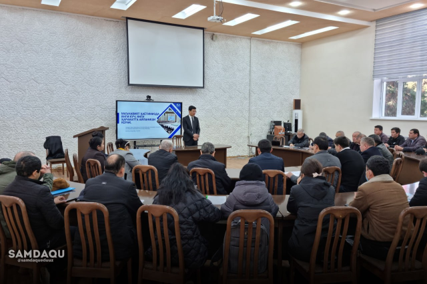
At Samarkand State University of Architecture and Construction named after Mirzo Ulugbek, a seminar was held dedicated to the topic: “The outcomes of reforms being implemented in the fields of spirituality, enlightenment, culture, art, and creativity, and defining priority directions for the future, as discussed at the extended meeting of the Republic Council on Spirituality and Enlightenment under the leadership of the President of the Republic of Uzbekistan, Shavkat Mirziyoyev.”The seminar was attended by representatives from the Faculties of Architecture, Cultural Heritage Preservation, Economics and Management, and Construction, as well as members of the rectorate departments.During the seminar, professors and lecturers from the Department of Social and Natural Sciences presented information on the ongoing work and initiatives in Uzbekistan aimed at the development of spirituality, enlightenment, culture, art, and creativity.
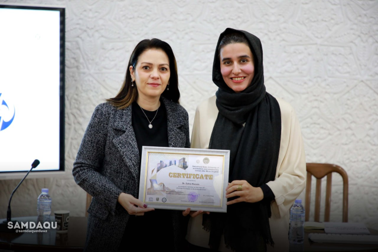
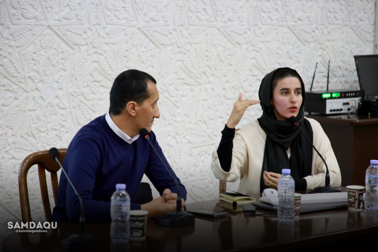
A scientific seminar was held at the Samarkand State University of Architecture and Civil Engineering named after Mirzo Ulugbek with the participation of Dr. Zahra Hussain, a well-known architect and humanitarian geographer working in Pakistan.
The event was attended by the rector of the university, Dr. Chidem Turkyilmaz, vice-rectors, professors, students and young people, as well as specialists conducting research in the field.
In her speech, Dr. Zahra Hussain emphasized the importance of the human factor in protecting ecological heritage. She extensively covered the impact of anthropogenic factors on the ecology of heritage and discussed the interrelationship between modern architecture and ecology.
Also, during the seminar, detailed answers were given to the questions of students and participants on environmental issues.
Dr. Zahra Hussain, expressing her gratitude to the students who actively participated in the seminar, noted that the scientific approaches and initiative of young people play an important role in solving environmental problems.
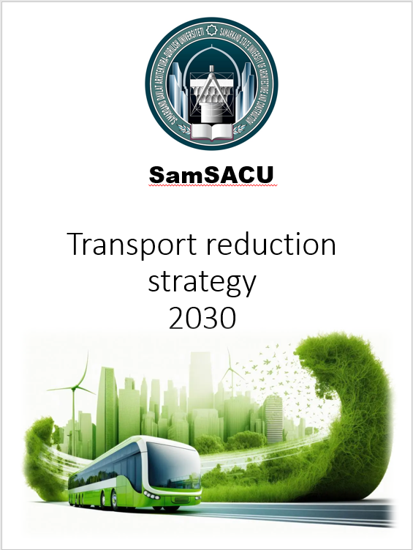
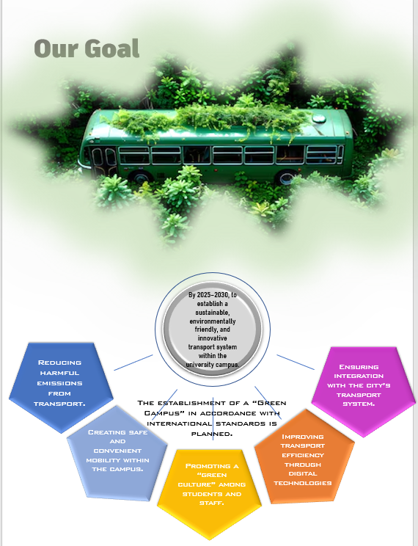
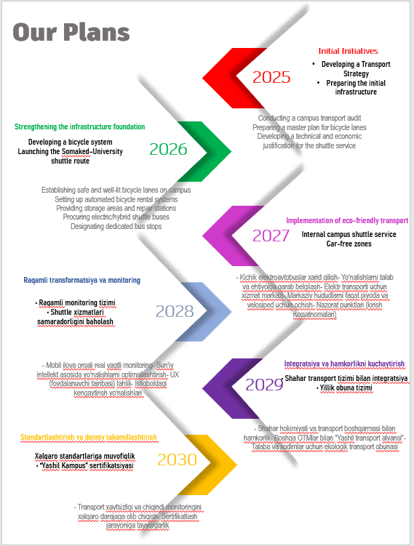
In 2024, Samarkand State University of Architecture and Construction (SamSACU) developed a comprehensive strategic plan titled “Transport Reduction Strategy 2030”, aimed at minimizing transport-related environmental impacts and promoting sustainable mobility on campus. The strategy aligns with the United Nations Sustainable Development Goals (SDGs), particularly SDG 11 – Sustainable Cities and Communities, and SDG 13 – Climate Action.
Samarkand State University of Architecture and Construction aims to achieve a number of positive outcomes through the implementation of a transport reduction strategy within its campus.
First and foremost, these measures are designed to promote environmental sustainability by reducing harmful emissions from vehicles, improving air quality, and increasing green spaces, thereby creating a healthier and more pleasant environment.
In addition, by enhancing pedestrian and bicycle movement across the campus, the strategy seeks to support a healthy lifestyle for students and staff through convenient and safe mobility.
The reduction of traffic noise will also help create a peaceful and comfortable atmosphere for the educational process, while central areas of the campus will be transformed into open public spaces for student activities.
The strategy envisions developing a sustainable mobility model by reducing automobile dependency and encouraging the use of public transportation and micromobility options.
Moreover, through the use of digital management systems, the university plans to organize transport flows efficiently, regulate parking areas, and optimize service logistics.
Most importantly, these initiatives will enhance the national and international reputation of the university, contribute to the creation of a modern, safe, and environmentally sustainable campus model, and foster an innovative educational environment for students.
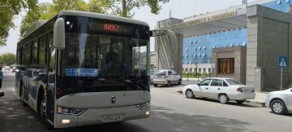
Bus routes No. 66, 7, and 8 have been established to connect the campus of Samarkand State University of Architecture and Construction (SamSACU) with key central points of the city. These buses conveniently pass through the university campus area and along its main academic buildings, ensuring efficient, safe, and accessible transportation for professors, staff, and students across the university’s facilities.
In addition, bus fares are subsidized by the government, allowing students and employees to travel at reduced and affordable rates, further supporting mobility and accessibility within the city and the university community.
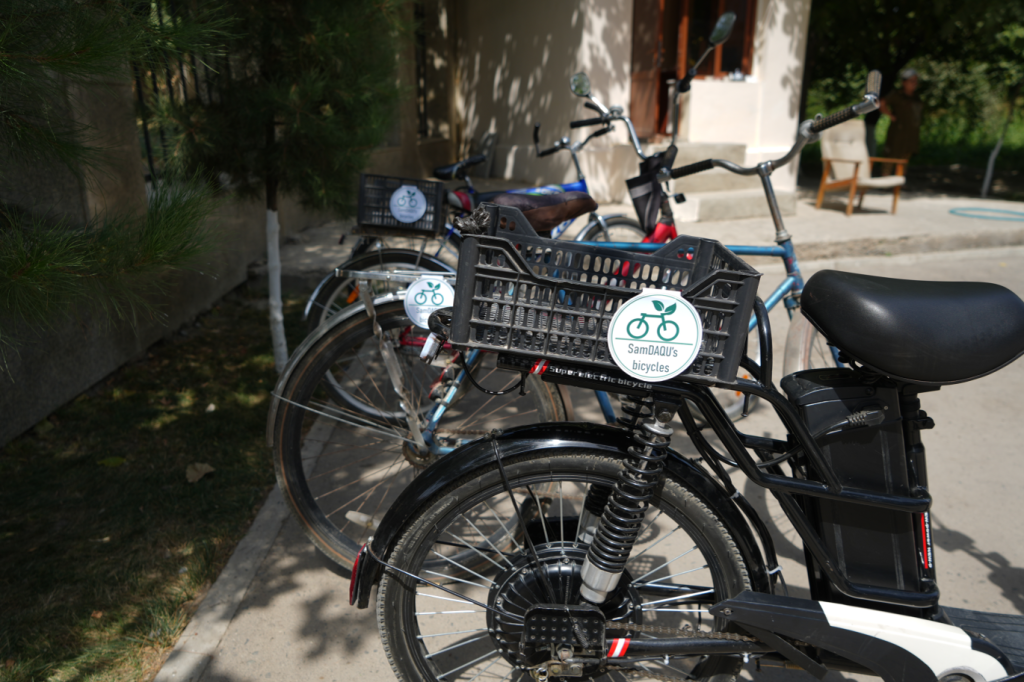
In addition, bicycles, electric scooters, and small electric vehicles have been provided for university staff, making it easier for maintenance and service personnel to move around the campus. In the coming years, the university also plans to introduce bicycles for students. Moreover, each campus is equipped with dedicated bicycle parking areas, creating convenient conditions for students who wish to commute to the university using their own bicycles.
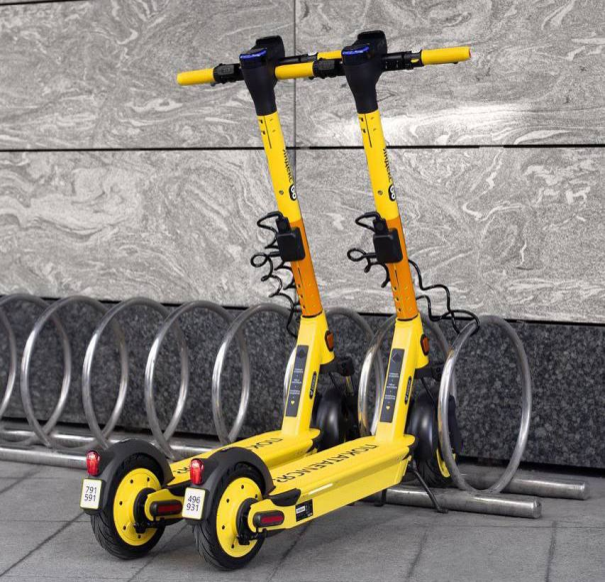
In cooperation with the Regional Transport Department, Yandex Go e-scooters have been installed on the campus of the Samarkand State University of Architecture and Construction. University professors and students actively use them to move around the campus, which has helped reduce the use of conventional transport by 20%.
The use of these sustainable modes of transport, as well as the car and bicycle parking areas, is completely free of charge for all university staff and students.
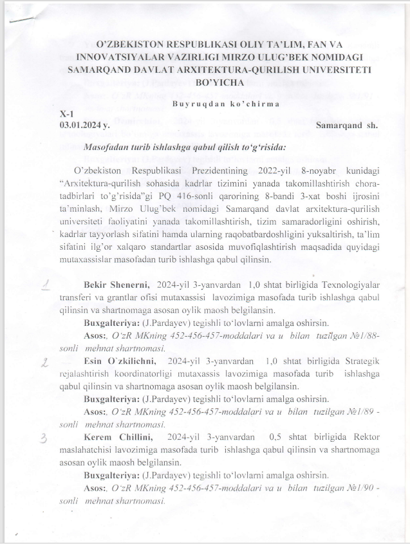
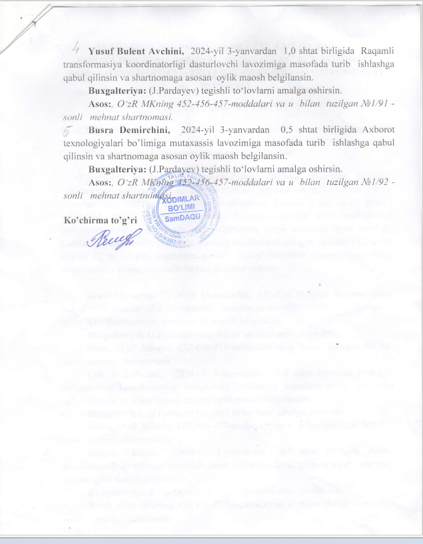
The Samarkand State Architecture and Construction University has implemented a remote work policy for its staff, aimed at promoting modern working methods, ensuring efficient use of time and resources, and increasing employee productivity.This policy supports the sustainability of university operations, reduces the environmental footprint, and helps maintain a healthy balance between work and personal life. According to the policy, employees in certain positions are granted the opportunity to work remotely, enabling them to perform their duties effectively through digital platforms and necessary technical tools.The remote work process is based on the principles of accountability, efficiency, and collaboration. By adopting this approach, the university’s administration contributes to the Sustainable Development Goals by protecting employee well-being, reducing the use of transportation, and minimizing carbon emissions.
Based on paragraph 8 of the Resolution of the President of the Republic of Uzbekistan No. PQ–416 dated November 8, 2022, “On measures to further improve the system of training specialists in the field of architecture and construction,” as well as the relevant articles of the Labour Code of the Republic of Uzbekistan, a remote working system has been introduced. Within this framework, the activities of remote employees have been organized, and their list is attached.
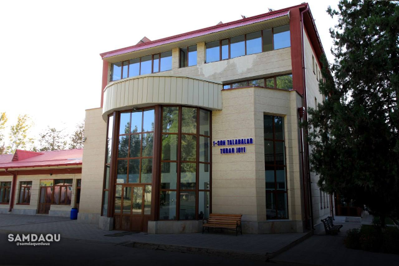
At the Samarkand State Architecture and ConstructionUniversity, a total of three student dormitories have been established to provide affordable housing for students.
These dormitories together accommodate 1,115 students and offer living spaces that are 50% cheaper than the average housing prices.
Dormitory No. 1 — 487 places
Dormitory No. 2 — 360 places
Dormitory No. 4 — 308 places
In these affordable dormitories, free accommodation is provided for students with disabilities and those from low-income families.
According to the Resolution No. 563 of the Cabinet of Ministers of the Republic of Uzbekistan dated September 9, 2021, “On measures to increase the level of student accommodation in higher education institutions,” the Samarkand State Architecture and Construction University has planned the construction of an additional dormitory building for 800 students for the 2024–2025 academic years to provide affordable housing for students.
At present, construction works are actively underway on this new dormitory.
As an organization, Samarkand State Architecture and Construction University functions as a leading scientific and practical center in the field of urban development. In close collaboration with the Samarkand City Urban Planning Council, the University ensures that the residential projects being developed fully comply with architectural and construction standards. At the same time, it promotes the development of affordable yet high-quality and functional projects aimed at creating comfortable and modern living conditions for the population. This approach not only guarantees adherence to urban planning regulations but also contributes to meeting the housing needs of residents and enhancing the overall aesthetic and social environment of the city.
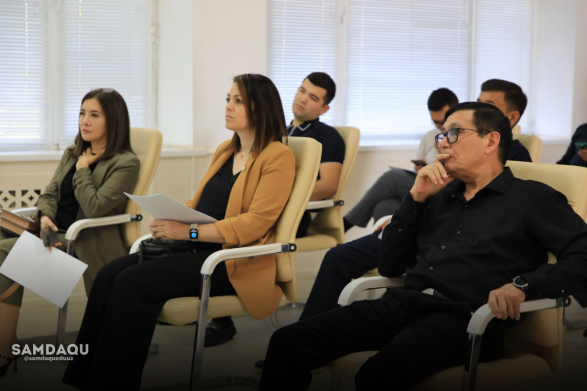
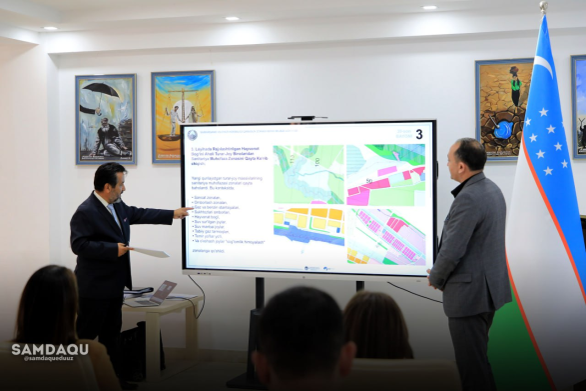
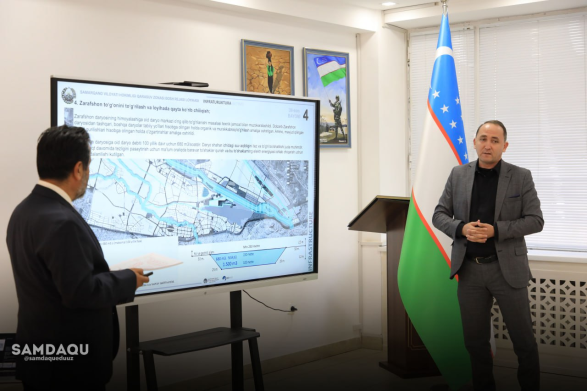
The consultation meeting was attended by Nadir Doğan and Hasan Doğan, the founder and chairman of ND IMAR from Türkiye. As project partners, Dr. Chidem Turkyilmaz, Rector of Mirzo Ulugbek Samarkand State Architecture and Construction University, architects Alisher Badalov and Fotima Khudoyqulova from the Urban Planning Council, and Bushra Nur Bardakchi, senior lecturer at the Department of Urban Planning, participated on behalf of the University.The project author presented the final phase of the Qorasuv Master Plan, which includes detailed designs for residential complexes, landscape design, commercial zones, public transport systems, and smart infrastructure technologies.
According to Nadir Doğan, “This project will not only shape the new urban identity of Samarkand but also bring numerous innovations in the field of urban planning.”In addition, ND IMAR designers showcased the project details through a realistic animated presentation that highlighted various sustainable, ecological, and technological design approaches.During the meeting, participants also shared opinions and proposals regarding the development of affordable housing solutions aimed at ensuring comfort, accessibility, and inclusivity for the city’s residents.
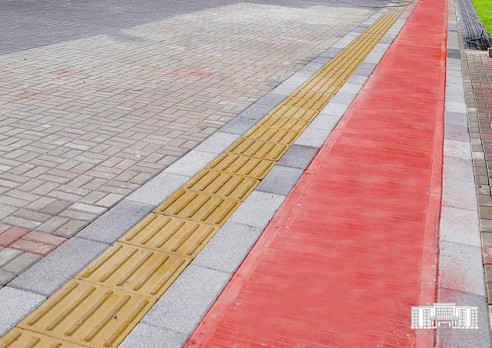
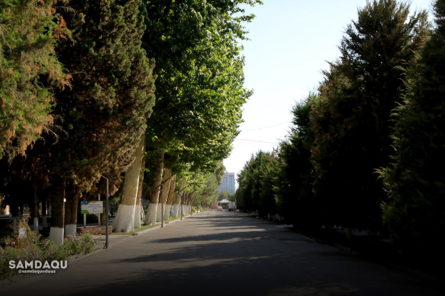
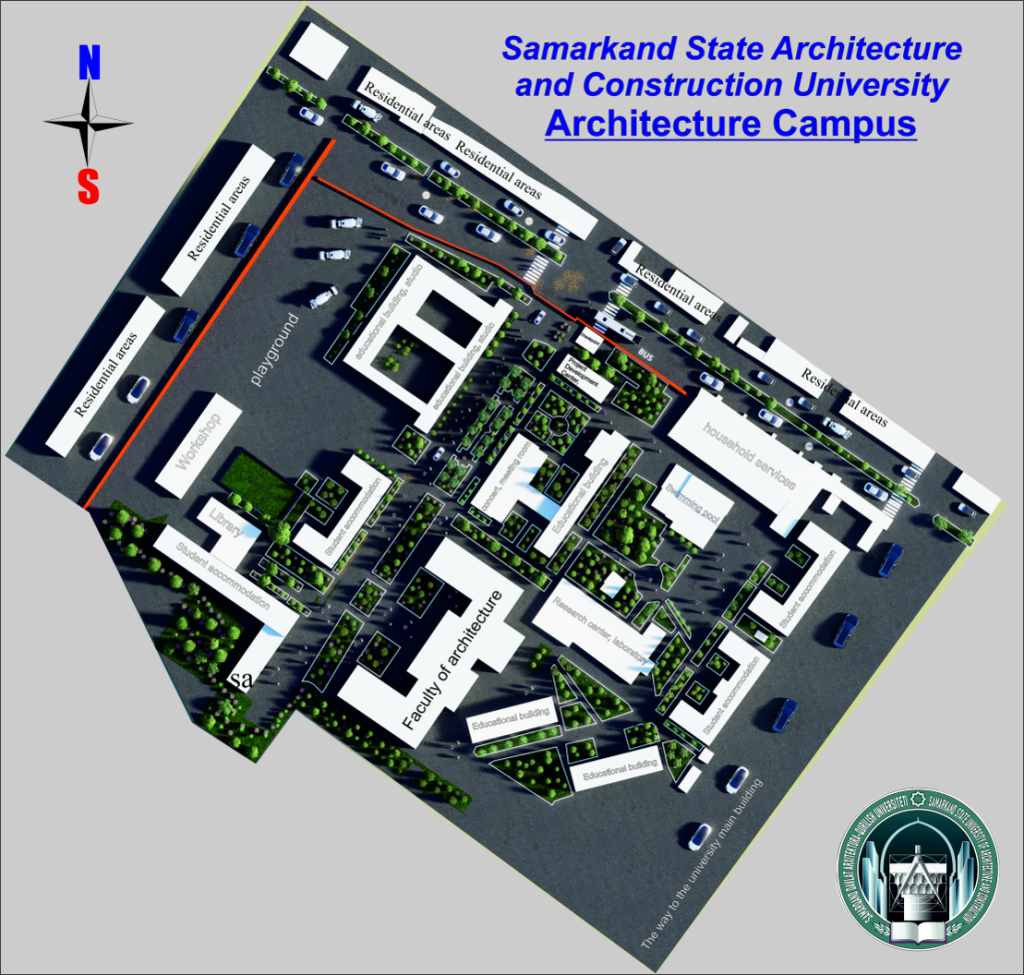
In Samarkand, along with the main roads, pedestrian pathways are being reorganized. Similarly, all pedestrian paths within the SamSACU campus have been renovated. In particular, a pedestrian walkway 1.5 meters wide, a special walkway for people with disabilities 0.8 meters wide, and bicycle lanes 1 meter wide have been established.
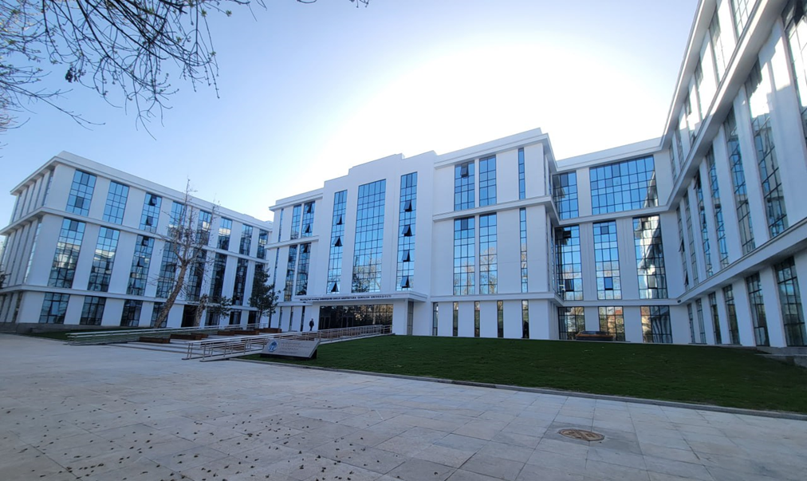
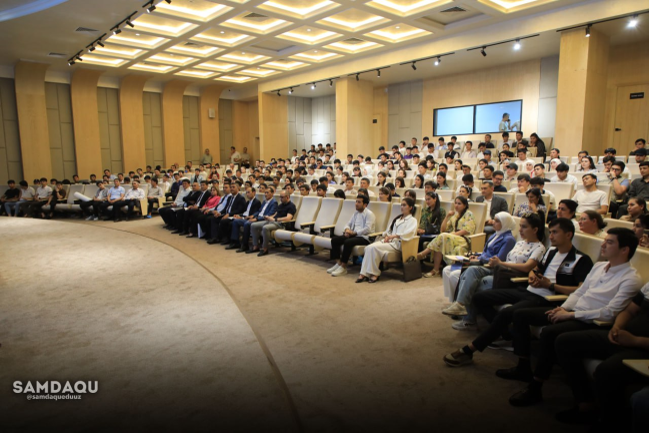
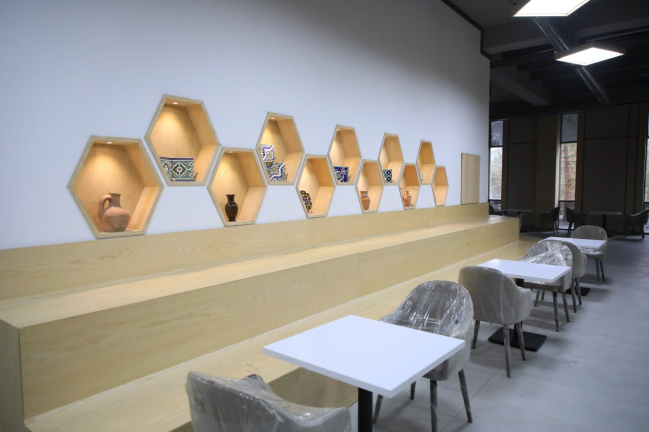
In accordance with paragraph 36 of the “Roadmap for the Transformation and Comprehensive Development of Mirzo Ulugbek Samarkand State Architecture and Construction University”, as defined by the Decree of the President of the Republic of Uzbekistan No. PQ-416 dated November 8, 2022, a new academic building with a capacity of 3,000 students, fully compliant with green building standards, has been constructed on the site of the university’s old, dilapidated canteen building (11.4.9).The construction of this building, as well as other ongoing construction and planning works within the university, was carried out in cooperation with the “Single Customer Service” State Unitary Enterprise.In its construction and planning processes, the university adheres to the Resolution of the Cabinet of Ministers of the Republic of Uzbekistan on the “Roadmap for the Harmonization of Normative Documents in the Construction Sector with International Standards” and the “Roadmap for Further Improvement of Technical Regulation Documents in the Field of Construction and Housing and Communal Services.”Within this framework, Uzbekistan has approved the implementation of foreign normative standards, including:European Codes (Eurocodes, ES)British Standards (BS)Chinese National Building Standards (GB, CJ, JC, JG, etc.)Korean Building Codes (KBC)Russian Construction Norms and Rules (SNiP)U.S. International Building Code (IBC)Japanese Industrial Standards (JIS)
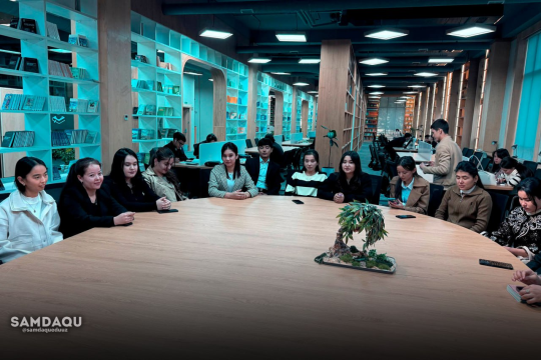
“The library of Samarkand State Architectural and Construction University is open to everyone and free to use. Below, we have listed some of our local members. In addition, many local users visit the library frequently throughout the day.”
“The university has purchased a multi-year subscription to the Scopus database for its academic staff and students. This extended access provides free and uninterrupted availability of scientific articles, research works, and global scholarly resources. Through this initiative, the university expands access to high-quality knowledge resources, ensures an inclusive learning environment, and, while supporting sustainability goals, strengthens scientific development and educational capacity within the community.”