SAMSACU LABOR RELATIONS
In accordance with the Decrees of the President of the Republic of Uzbekistan on “Further Strengthening the Social Protection System and Improving the Living Standards of the Population” and “Improving Incentives for Employees in the Higher Education System,” Samarkand State University of Architecture and Construction (SamDAQU) is consistently working to enhance the financial well-being of its staff and faculty members.
To implement these decrees, the university has established a system ensuring that all staff and faculty receive a monthly salary of at least the local subsistence minimum or an amount equivalent to the poverty threshold set for a family of four.
These measures strengthen the social protection of higher education employees, appropriately reward their work, and contribute to improving the quality of education.
Additionally, the university regularly undertakes initiatives to improve employees’ living conditions, create a healthy working environment, and develop social infrastructure.
In line with the tasks set out in the presidential decrees, SamDAQU continues to operate as a socially responsible organization by providing its staff with a stable salary not lower than the established subsistence minimum.
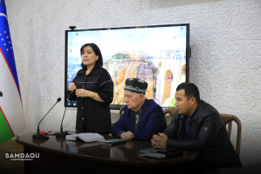
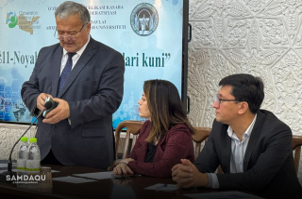
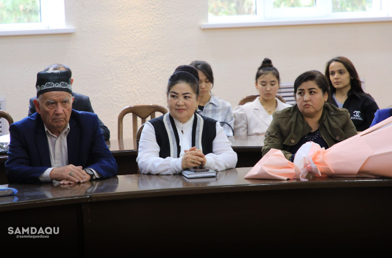
At Samarkand State University of Architecture and Construction named after Mirzo Ulug‘bek, a roundtable discussion was held on the “Law on Trade Unions” and the new “Labor Code.”
The event was organized in celebration of November 11 — Trade Union Day.
As part of the ongoing project “Your Honorable Work, Your Honest Life is a School of Example for Us,” initiated by the University’s Anti-Corruption “Compliance Control” Department, the next guest was Abdurakhmon Akhunjonov, Chairperson of the Primary Trade Union for University Staff and Students.
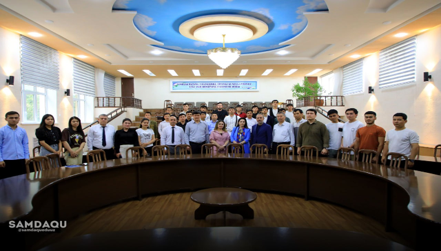
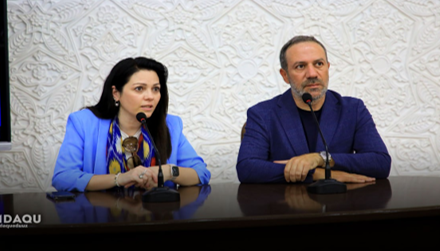
As part of “Career Day,” Oğuz Onur Özgüven, Chairman of the Board of Özgüven Construction Company, visited Samarkand State University of Architecture and Construction named after Mirzo Ulug‘bek to meet with graduates and representatives of various organizations offering job opportunities.
The meeting was attended by the university rector, Dr. Chidem Turkyilmaz, along with faculty deans Dilnoza Kamalova, Doniyor Jo‘raqulov, Ilhom Mahmatqulov, and Mas’ud Eshmurodov, as well as graduating students. During the discussion, the students asked questions related to architecture and construction.
The company chairman responded by sharing insights on developing large-scale projects, innovative approaches in construction, training young specialists, and upcoming plans.
Additionally, information was provided on reviewing the portfolios of graduates wishing to gain experience and internships at leading Turkish architecture and construction companies, with opportunities being offered based on a selection process.
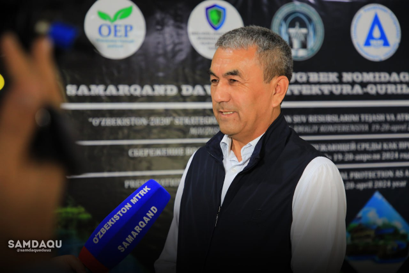
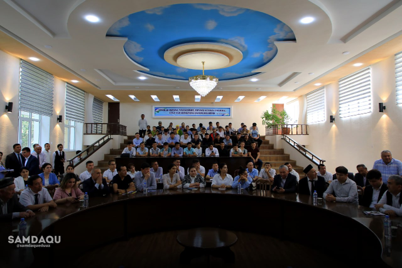
A “Career Day” job fair was held at Samarkand State University of Architecture and Construction named after Mirzo Ulug‘bek, bringing together graduates and employers.
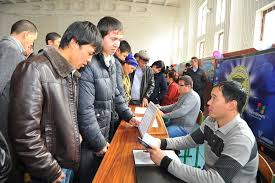
Following the opening ceremony, graduates and employers engaged in direct, face-to-face communication. The fair featured 59 major companies, enterprises, and organizations in the fields of architecture, urban planning, and construction, offering a total of 746 vacant positions.
Nearly 600 graduating students attended the job fair to familiarize themselves with the available vacancies. The university currently has 8,679 students, and in the current academic year, 1,576 students are graduating, including 1,566 undergraduates and 10 master’s degree students.
During the event, direct discussions between employers and graduates resulted in approximately 120 students signing tripartite agreements, including 86 for resumes submitted and 34 for confirmed employment.
In accordance with the decrees of the President of the Republic of Uzbekistan on “Measures to Further Improve the System for Protecting Human Rights,” “Additional Measures on Preventing Forced Labor and Protecting the Rights of Children,” and the requirements of the national program for implementing International Labour Organization (ILO) conventions, Samarkand State University of Architecture and Construction (SamDAQU) maintains a strict policy against human rights violations, forced labor, modern slavery, human trafficking, and child labor.
The university regards human dignity and rights as fundamental values. To this end, SamDAQU strictly applies the principles of labor freedom, voluntariness, and equality for all staff, faculty, technical personnel, and students. The university:
- Strictly prohibits any form of forced labor or work under duress;
- Bans the use of child labor in any form;
- Ensures free, safe, and fair working conditions for staff and students;
- Maintains an internal control system to prevent any violations of human rights;
- Fully complies with the Labor Code of the Republic of Uzbekistan and international standards.
Additionally, the university regularly conducts awareness campaigns, trainings, and seminars on preventing forced labor. The promotion of human rights, labor freedom, and social justice among staff and students is a continuous practice.
Through this policy, SamDAQU demonstrates itself as an educational institution that respects human rights, adheres to ethical labor principles, and acts as a socially responsible university.

University Policy on Per-Employee Expenditures
Based on the decrees of the President of the Republic of Uzbekistan on “Improving the Financing of Higher Education” and reforms aimed at enhancing the economic independence of state higher education institutions, Samarkand State University of Architecture and Construction (SamDAQU) systematically plans financial expenditures per employee within its annual budget.
The total per-employee expenditures at the university cover the following main areas:
- Base Salary and Allowances – Determined for faculty, research staff, and technical personnel based on position, qualification level, academic title, and teaching workload.
- Social Contributions – Includes pension, social insurance, health contributions, and mandatory social payments.
- Professional Development and Training – Costs for sending staff to local and international trainings, seminars, and professional development courses.
- Healthy and Safe Working Conditions – Expenses related to labor protection, office equipment, technical support, and creating a comfortable work environment for employees.
- Additional Incentive Payments – Rewards for scientific activities, grant projects, social initiatives, and achievements that improve the quality of education.
In 2024, Samarkand State University of Architecture and Construction (SamDAQU) systematically organized academic, industrial, and pre-graduation internships for its students. Students completed their internships in organizations corresponding to their specialties, including architecture, construction engineering, landscape design, urban planning, and other fields.
During the internships, students actively participated in companies such as “Samarqand Qurilish,” “SamArxLoyih,” “QurilishMontajServis,” as well as urban planning departments under local government authorities. The duration of internships ranged from one to three months in accordance with the curriculum.
Internship supervisors maintained daily monitoring, and students were directly involved in project design, measurement tasks, construction process analysis, creating design projects, and performing calculations. Each student kept a daily logbook and was evaluated at the end of the internship by both the employer and university authorities.
At the end of the year, the most active interns were recognized, and recommendations were developed to improve academic programs based on internship outcomes. In 2024, SamDAQU achieved a high internship participation rate, with the results playing a crucial role in strengthening students’ professional preparation and practical skills.