Building Global Partnerships for a Sustainable Future
Throughout the year, the university achieved significant progress in strengthening international relations, integrating global academic practices into the educational process, and promoting the principles of sustainable development within the institution.
In particular, “International academic mobility programs for students” were launched, providing opportunities for students to participate in short-term study and internship programs at foreign universities. At the same time, “professional development and internship programs for the university’s academic staff” were successfully organized, allowing faculty members to gain international experience and enhance their pedagogical and research skills.
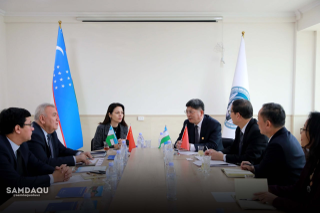
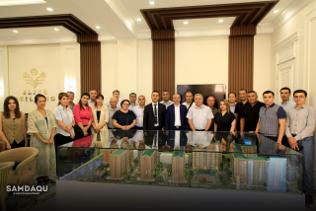
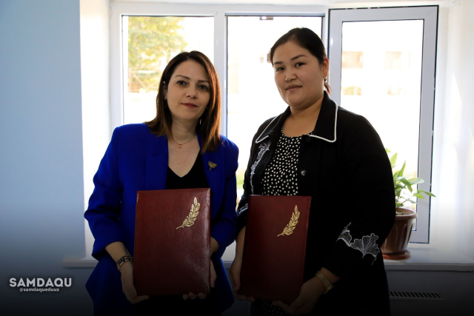
To ensure sustainable collaboration, “SamSACU signed more than ten Memorandums of Understanding (MoUs)”with higher education institutions and research centers from various foreign countries. These agreements aim to promote joint academic and research projects, international conferences, and collaborative degree programs.
Notably, during 2024, “SamSACU significantly strengthened its cooperation with leading universities and industrial enterprises from China, Italy, the United States, and Kyrgyzstan.” These partnerships contributed to expanding academic exchange, enhancing research capacity, and supporting the university’s efforts to improve its standing in international rankings.
Such initiatives not only reinforce the university’s global presence but also align with the United Nations Sustainable Development Goal 17 — “Partnerships for the Goals” — fostering international collaboration for sustainable growth and innovation in higher education.
In 2024, Samarkand State University of Architecture and Construction(SamSACU) elevated its international cooperation to a new level.
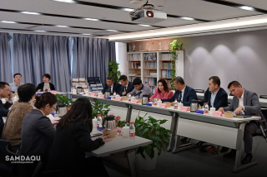
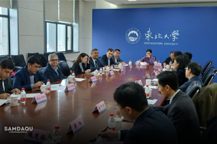
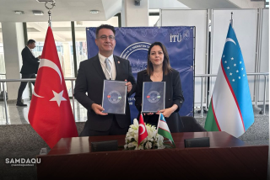
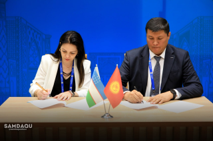
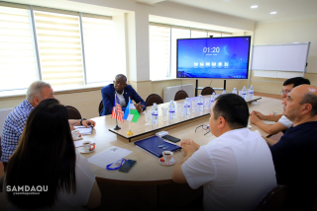
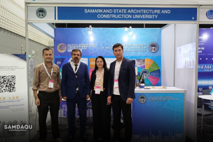
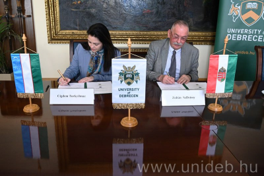
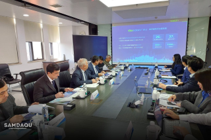
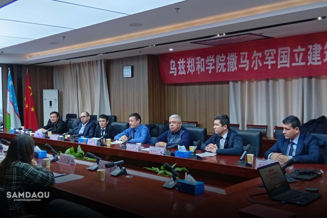
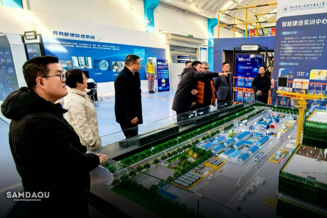
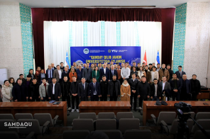
Within the framework of international cooperation, scientific internship programs for academic staff and students were organized throughout 2024.
These initiatives align with SamSACU’s strategic goals to enhance international experience exchange, professional development, and research capacity. Through these internships, professors and lecturers had the opportunity to acquire modern pedagogical and research practices at foreign universities, while students gained valuable practical experience and were actively involved in academic research activities.
These programs have become an essential step toward strengthening the university’s global integration and fostering long-term sustainable partnerships.
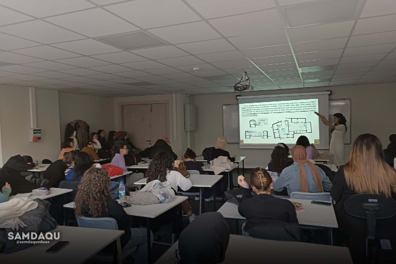
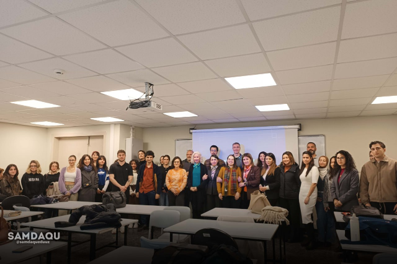
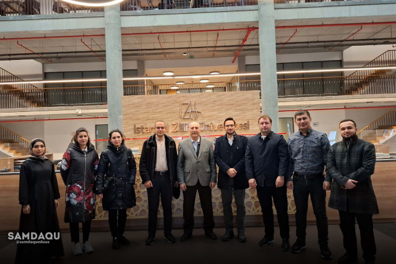
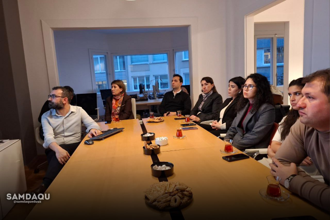
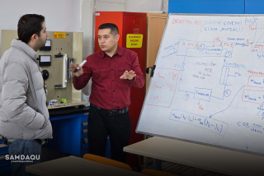
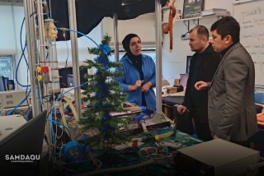
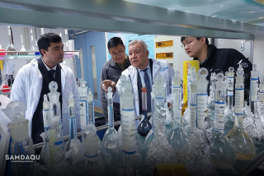
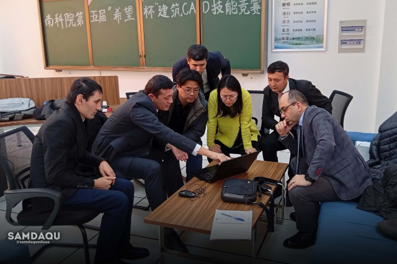
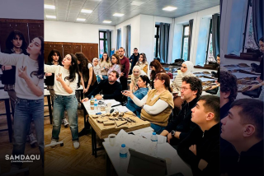
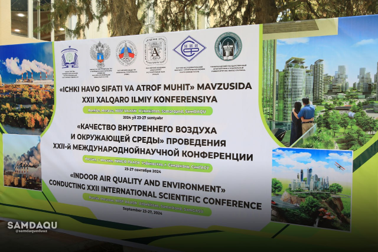
From September 23 to 27, 2024, the XXII International Scientific Conference on “Indoor Air Quality and Environment” was held at Mirzo Ulugbek Samarkand State University of Architecture and Civil Engineering. The event was organized in collaboration with the Research Institute of Building Physics of the Russian Academy of Architecture and Construction Sciences (NIISF RAACS).The conference focused on the rational use of energy resources in industrial and communal sectors, increasing the efficiency of gas supply systems, addressing environmental issues, and promoting energy-saving solutions. The event brought together a wide range of specialists from Russia and other foreign countries, as well as representatives of the university administration, faculty members, young researchers, and students.Within the framework of the conference, the university rector, Dr. Chidem Turkyilmaz, signed several Memorandums of Understanding with foreign higher education institutions to strengthen cooperation in academic exchange, professional development, and internship programs for professors and students.At the conclusion of the conference, key thematic issues were discussed, and a final resolution was adopted summarizing the main outcomes and future directions of collaboration.
At Mirzo Ulugbek Samarkand State University of Architecture and Civil Engineering, a scientific-practical conference titled “Challenges in Implementing Innovative Achievements of Modern Science in Architecture and Construction” was held.The conference was opened by Mr. Joramirza Qayumov, Advisor to the Rector. Welcoming speeches were delivered by Mr. Usmon Khushvaqtov, Coordinator for Scientific Research and Projects, Mr. Perviz Ahmedzade, Dean of the Higher School of Science, and Ms. Dilnoza Kamalova, Dean of the Faculty of Architecture, who wished success to the conference participants.The main purpose of the conference was to analyze ongoing scientific research, support the academic and research activities of students and young scholars, and promote opportunities for international training and scientific development.The event was organized across eight thematic sections, covering key issues such as the development of architecture and urban planning based on innovation, advanced construction technologies, environmental challenges, renewable energy use, digital technologies in land management, and sustainable economic growth.Graduate and doctoral students presented their research findings in each section. At the conclusion of the conference, participants discussed the presented studies, shared ideas and recommendations, and a final resolution was adopted
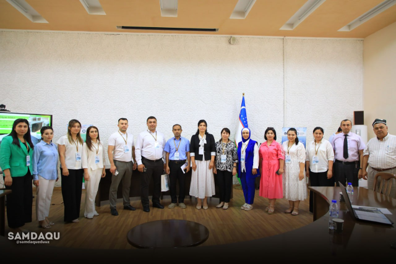
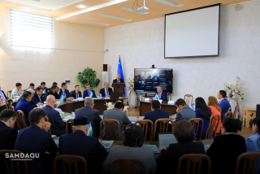
On April 22, 2024, Mirzo Ulugbek Samarkand State University of Architecture and Civil Engineering hosted an international scientific-practical conference on “Current Challenges in Implementing Achievements in Geomatics to Improve the Efficiency of Land Resource Use.”
The event was organized in collaboration with the “O‘zDavyerLoyiha” State Scientific-Design Institute, the Cadastre Agency of Samarkand Region, the Regional Branch of the Republican Aerogeodesy Center in Samarkand, and the Samarkand Regional Office of the State Cadastre Chamber.
Throughout 2024, Samarkand State University of Architecture and Civil Engineering took the initiative to strengthen its international collaboration and promote the principles of sustainable development by organizing approximately 10 international conferences and seminars. These events aimed to enhance the university’s academic and research potential, as well as provide students and young researchers with opportunities for international experience exchange.
The university delegation actively participated in these conferences and seminars, sharing their expertise and scientific achievements with the global academic community. During these events, strong collaborative ties were established with higher education institutions, non-governmental organizations (NGOs), international organizations, and government agencies, resulting in agreements for joint research projects, seminars, and training programs.
These initiatives support the university’s strategic goals of increasing its international standing, strengthening academic capacity, and fostering long-term sustainable partnerships in line with global development priorities.
Samarkand State Architecture and Construction University comprises 4 faculties and 19 departments, and, relying on its educational and scientific potential, provides high-quality educational services to the wider community. In 2024, the university enrolled over 8,600 students, including undergraduates, master’s, and doctoral students.
Under the departments, 5 research centers and 1 limited liability company have been established. Additionally, in order to implement the directives outlined in Decree No. 32 of the extended video conference chaired by the President of the Republic of Uzbekistan, Shavkat Mirziyoyev, on June 20, 2024, to address emerging challenges in the training of engineering personnel, and to strengthen cooperation between higher education institutions and industrial sectors based on the “network–enterprise–university” chain, a number of limited liability companies, organizations, and enterprises were established in connection with the 19 departments, and departmental branches were created under scientific-research cooperation agreements.
These initiatives were undertaken as a strategic step aimed at enhancing the university’s scientific potential, guiding students towards practical experience, and improving the quality of engineering personnel training.
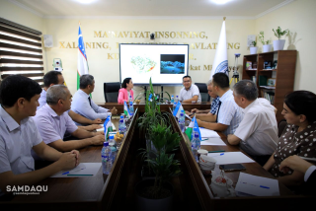
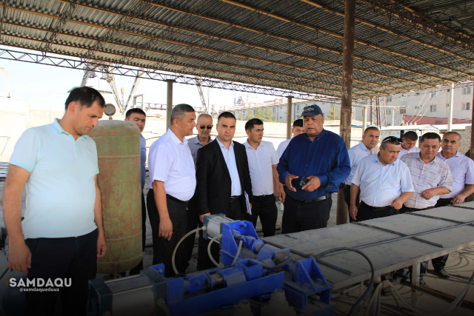
The primary purpose of establishing these entities is to strengthen long-term and sustainable cooperation between the university, industry, and research organizations. This not only provides students with scientific and practical skills but also engages them in real-world professional processes, improves the quality of engineering personnel training, and promotes the development of innovative approaches.
Furthermore, these initiatives create a close linkage between the educational process and industrial and research activities, reinforcing cooperation based on the “network–enterprise–university” model. As a result, the sustainability of the scientific-research environment within the university is enhanced, resources are utilized efficiently, and continuous improvement in the quality of education is ensured.
This approach is also implemented as a strategic step aimed at ensuring long-term socio-economic sustainability, preparing young specialists in line with market demands, and strengthening the country’s scientific and technological potential.
Faculty of Architecture
Faculty of Construction
Faculty of Economics and Management
The Faculty trains bachelors in the following educational programs:
5341100 – Architecture (various types)
5150900 – Design (various types)
5341000 – Architectural Planning of Rural Areas
5341700 – Reconstruction and Restoration of Architectural Monuments
5342000 – Urban Planning and City Development
60212200 – Conservation of Cultural Heritage Objects
The Faculty trains masters in the following specialties:
5A150901 – Design: Interior Design
5A340101 – Architecture of Buildings and Structures
5A340102 – Architectural Theory and History, Restoration of Architectural Monuments
5A340103 – Urban Planning and Landscape Architecture
The Faculty trains bachelors in the following educational programs:
60112400 – Professional Education (various fields)
60722500 – Geodesy, Cartography, and Cadastre (by functions)
60730400 – Construction and Installation of Engineering Communications (various types)
60730500 – Design and Operation of Water Supply and Sewerage Systems
60720600 – Materials Science and Technology of New Materials (by sectors)
60730300 – Construction of Buildings and Structures (various types)
60730700 – Production of Building Materials, Products, and Structures
60730800 – Road Engineering (by sectors and activities)
60730300 – Civil Engineering
61020200 – Occupational Safety and Health (by sectors)
60713500 – Mechanical Engineering
60721500 – Geodesy and Geoinformatics
60723300 – Geomatics Engineering
60721700 – Cadastre
60711400 – Environmental Engineering
61020300 – Occupational Safety and Health Engineering
60710400 – Ecology and Environmental Protection (by sectors and fields)
60710500 – Electrical Engineering
61020100 – Life Safety
The Faculty trains masters in the following educational programs:
70721501 – Geodesy and Geoinformatics
70730301 – Civil Engineering
70730401 – Engineering Communication Systems, Construction, and Installation
70711801 – Environmental Engineering
The Faculty trains bachelors in the following educational programs:
60310100 – Economics (by sectors and fields)
60411300 – Business Management (by sectors)
60731300 – Real Estate Management
The Faculty trains masters in the following specialties:
70310102 – Economics (by sectors and fields)
70411201 – Management (Construction Management)
70731301 – Real Estate Management
Faculty of Conservation of Cultural Heritage
Bachelor’s Educational Programs:
60210300 – Museology: Expertise, Conservation, and Restoration of Museum Objects
60730800 – Reconstruction and Restoration of Architectural Monuments
60212200 – Conservation of Cultural Heritage Objects
60731100 – Reconstruction and Restoration of Architectural Monuments
Master’s Specialties:
70212201 – Conservation and Utilization of Cultural Heritage Objects
70110301 – Museology: Conservation, Restoration, and Preservation of Historical and Cultural Objects
70730103 – Architectural History and Theory
70730102 – Architectural Theory and History, Restoration of Architectural Monuments
At Samarkand State Architecture and Civil Engineering University (SamDAQu), specialized courses focused on sustainability and the United Nations Sustainable Development Goals (SDGs) are offered across various faculties and study programs. In particular, the programs in Architecture and Urban Planning, Environmental Engineering, Ecology and Environmental Protection, Water Supply, and Mechanical Engineering are designed with a focus on teaching the principles of sustainability.
These courses and modules provide students with skills in sustainable design and urban planning, energy efficiency, environmental compliance, water resource management, incorporating sustainability in engineering solutions, and designing projects based on principles of social responsibility.
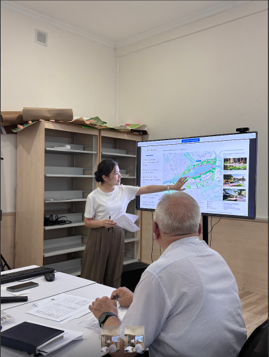
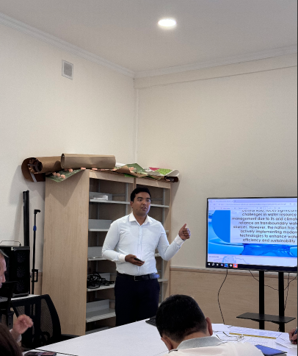
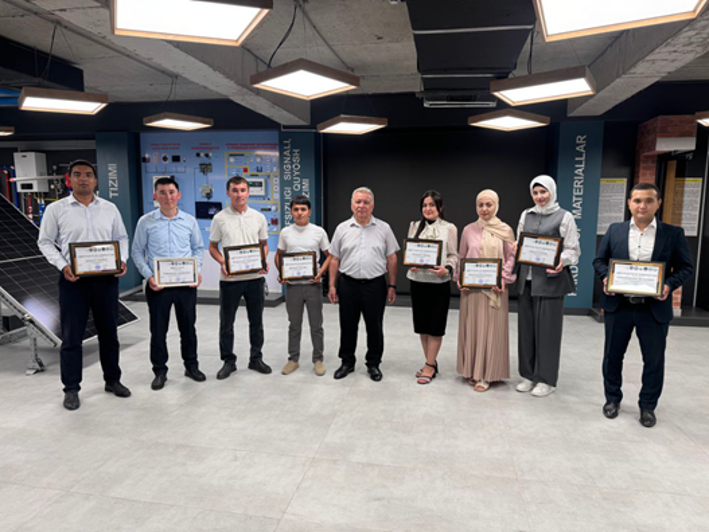
Samarkand State Architecture and Construction University, in collaboration with the Swedish Aral Sea Society (SASS), organizes an annual four-month international course on “Sustainable Development and Sustainability Science” during the spring semester. The Master of Science level academic course Sustainable Development and Sustainability Science (SDSS) has been developed by the Swedish Aral Sea Society (SASS) in cooperation with Uzbek academic research colleagues and gives an overarching introduction to the Sustainable Development challenges and a scientific view on how to approach them. The development of the course was based on SASS’ interest in the Aral Sea ecological situation and contacts established with Uzbek researchers in the implementation of the so called UZWATER project, sponsored by European Union and carried out 2012-2016. The course has two main parts, one lecture part and one student seminar part. The lecture part comprises 15 lectures presented by both Swedish and Uzbek teachers. The academic presentation part has short student presentations in English, each followed by student opposition of the content and presentation. Important aims of the second part are (i) to train the students in presenting academic material in English and (ii) to present a balanced opposition that illuminates strengths and weaknesses of the presentation. A special aim of the student presentation part is to train students in critical thinking regarding the sources of information and its relevance and value. In spring 2024 we will also include two distance conferences between students in Uzbekistan and Sweden.